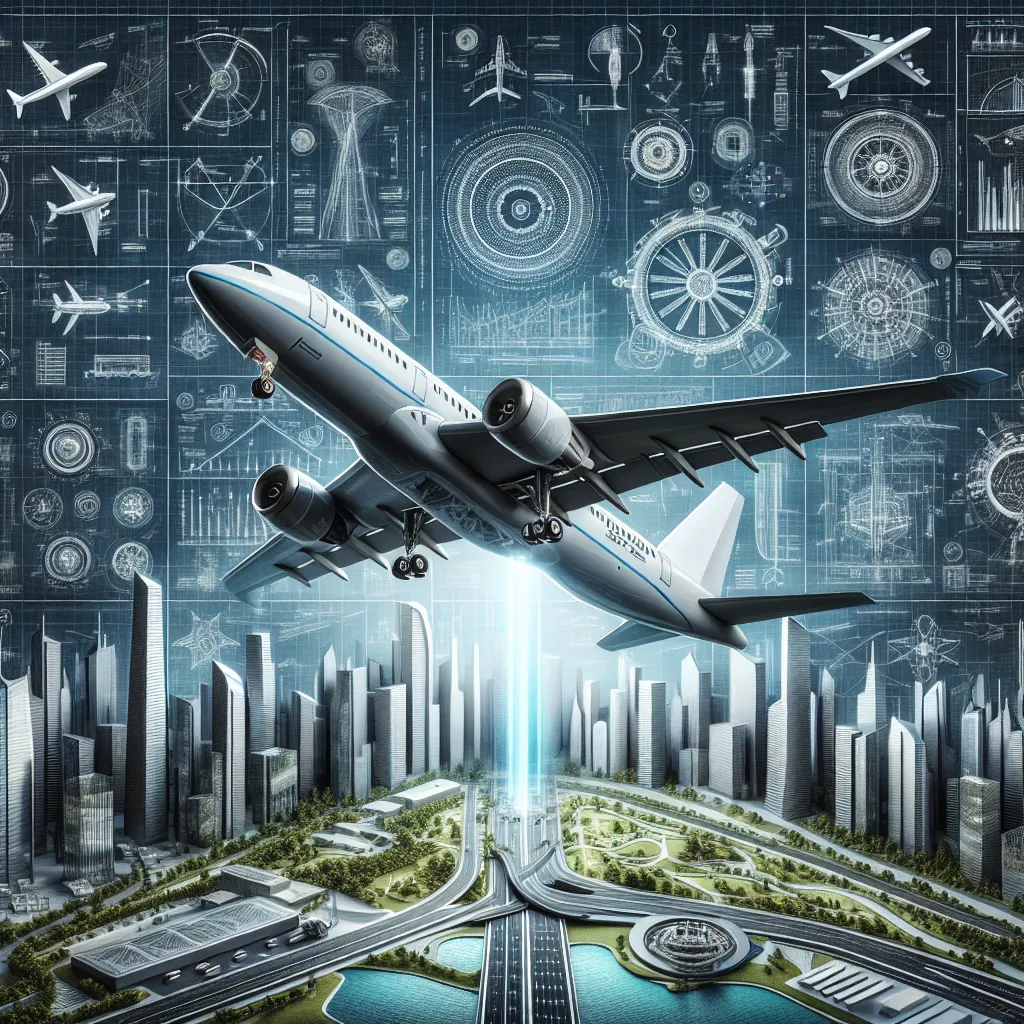
Title: “The Marvel of Air Travel: Unraveling the Science Behind Flying”
Introduction
Air travel is a marvel that has transformed our world, connecting continents and cultures like never before. But have you ever paused to consider the science that enables a 600-ton metal bird to soar through the skies? This article will delve into the fascinating physics behind aviation, and explore how it’s shaping our future.
The Physics of Flight
To understand how an airplane flies, we must first understand the four fundamental forces at play: lift, weight, thrust, and drag. Lift and weight are vertical forces; lift pulls the plane upwards, while weight pulls it downwards. On the other hand, thrust and drag are horizontal forces; thrust propels the plane forward, while drag tries to slow it down.
The secret to flight lies in balancing these forces. When the lift generated by the wings equals the weight of the aircraft, and the thrust produced by the engines equals the drag, the plane can maintain steady flight. This delicate balance is achieved through meticulous engineering and precise control systems.
The Role of Wing Design
Wing design plays a crucial role in generating lift. Wings are shaped with a curved upper surface and a flatter lower surface, a design known as an airfoil. As the plane moves forward, air flows faster over the curved top surface, creating a pressure difference that lifts the plane into the sky.
The marvel of wing design doesn’t stop there. Modern aircraft have adjustable wing flaps that can change shape during different phases of flight, optimizing lift and reducing drag.
The Power of Jet Engines
Jet engines, the heart of an aircraft, provide the necessary thrust for flight. They work on the principle of Newton’s third law: for every action, there is an equal and opposite reaction. In simple terms, jet engines suck in air at the front, compress it, mix it with fuel and ignite it. The resulting explosion pushes air out the back at high speed, propelling the plane forward.
The Future of Air Travel
As we look to the future, the science of air travel continues to evolve. Engineers are developing more efficient engines and lighter materials to reduce fuel consumption and environmental impact. There’s also exciting research into electric and hybrid planes, which could revolutionize the industry.
Conclusion
The science behind air travel is a testament to human ingenuity and the relentless pursuit of knowledge. From understanding the fundamental forces of flight to harnessing the power of jet engines, we’ve mastered the art of soaring through the skies in a 600-ton metal bird. As we continue to innovate and push the boundaries of what’s possible, the future of air travel promises to be even more astonishing.