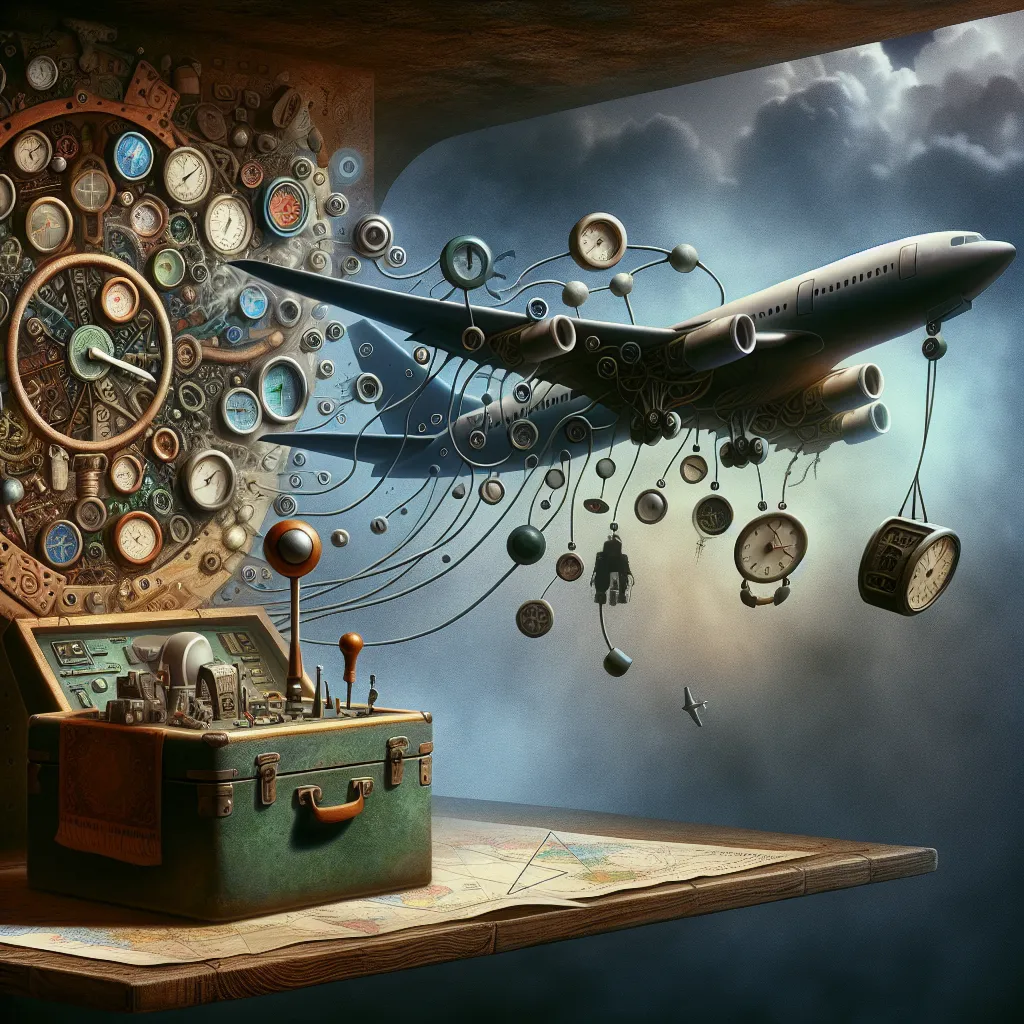
Title: “7 Mind-Blowing Secrets of Air Travel: Why Time Flies at 35,000 Feet”
Introduction
You’ve probably experienced it before – the sensation that time is racing by when you’re cruising at 35,000 feet. But have you ever stopped to wonder why? Today, we’re going to unravel the seven mind-blowing secrets of air travel that airlines don’t want you to know.
1. The Science of Time Perception
Firstly, let’s delve into the science of time perception. Our brains perceive time based on the number and intensity of new experiences we encounter. When you’re in a plane, your senses are bombarded with novel sights, sounds, and feelings, which makes time seem to speed up.
2. The Jet Stream Effect
The jet stream, a band of strong winds high in the atmosphere, can significantly affect flight times. When flying with the jet stream, planes can reach their destination faster, creating the illusion of time flying.
3. The Cabin Pressure Conundrum
Cabin pressure also plays a role in our perception of time. The lower oxygen levels at high altitudes can lead to mild hypoxia, which can distort our sense of time.
4. The In-flight Entertainment Distraction
In-flight entertainment systems are designed to distract passengers and make the flight seem shorter. By immersing yourself in movies or games, you’re less aware of the passage of time.
5. The Time Zone Trick
Crossing multiple time zones during a flight can mess with your internal clock. This disorientation, known as jet lag, can make it feel like time is whizzing by.
6. The Flight Routine Repetition
The repetitive nature of the flight routine – meals, movies, sleep – can also make time seem to pass more quickly. It’s the same principle as the adage “time flies when you’re having fun.”
7. The Anticipation Factor
Finally, the anticipation of arriving at your destination can make time seem to speed up. It’s a psychological phenomenon known as “time compression,” where our expectation of the future affects our perception of the present.
Conclusion
So there you have it, seven fascinating reasons why time seems to fly when you’re 35,000 feet high. From the science of time perception to the effects of cabin pressure and jet streams, these secrets reveal the intriguing complexities of air travel. Next time you’re on a flight, remember these points, and perhaps the journey won’t feel so long after all!