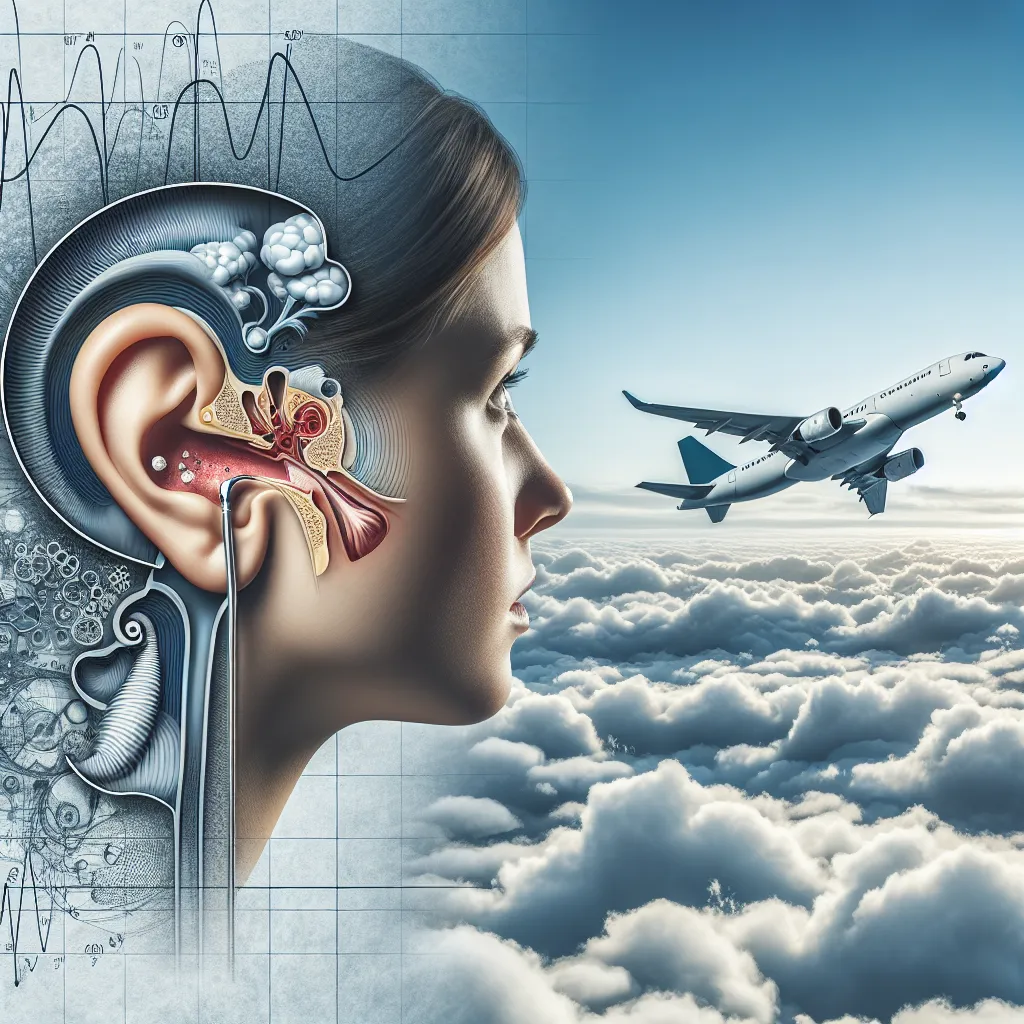
Title: “The Fascinating Science Behind Your Popping Ears at 30,000 Feet”
Subheading: Understanding the Phenomenon
Ever been on an airplane and wondered why your ears suddenly feel like they’re under pressure, or why they ‘pop’? This is a common experience for air travelers and it’s all down to a fascinating aspect of human physiology and atmospheric physics.
Subheading: The Role of the Eustachian Tubes
Firstly, let’s dive into the anatomy of the ear. The Eustachian tubes are small passageways that connect your middle ear to the back of your throat. Their primary function is to equalize the air pressure in your middle ear with the pressure outside your body. When you’re on the ground, this pressure is usually the same or very similar. However, when you ascend to 30,000 feet, the air pressure drops significantly.
Subheading: Atmospheric Pressure and Altitude
At sea level, atmospheric pressure is at its highest because of the weight of the air above us. As we ascend, the atmospheric pressure decreases because there’s less air above us exerting force. Commercial airplanes typically cruise at altitudes of around 35,000 feet where the air pressure is much lower than our bodies are accustomed to.
Subheading: The Physics of Air Travel
When the plane takes off and starts to climb, the air pressure inside the cabin decreases. Meanwhile, the air pressure in your middle ear remains the same as it was on the ground. This creates a pressure difference, causing your eardrums to push outward. This is the uncomfortable sensation of pressure or fullness you may experience.
Subheading: The ‘Pop’ Explained
Your body naturally tries to equalize this pressure difference. It does this by allowing air to flow from your middle ear to the back of your nose and throat, where it’s then swallowed or exhaled. This is where the ‘pop’ comes in. It’s the sound of your Eustachian tubes opening to let this air flow through.
Subheading: Preventing Discomfort During Flights
There are a few simple tricks to help your Eustachian tubes equalize the pressure more effectively. Swallowing, yawning, or chewing gum can help stimulate the muscles that open your Eustachian tubes. If these don’t work, try a technique called the Valsalva maneuver: pinch your nostrils shut, take a deep breath in your mouth, then try to blow out of your nose while keeping your nostrils pinched. This can help force air through your Eustachian tubes and equalize the pressure.
Conclusion: The Journey Beyond the Clouds
So, the next time you’re jetting off and your ears start to pop, remember it’s just your body adapting to the changes in atmospheric pressure. The science behind air travel is not just about soaring above the clouds, but also about the incredible ways our bodies adjust to these new environments. Understanding these processes can make your journey more comfortable and intriguing, turning a simple flight into a fascinating lesson in physics and physiology.