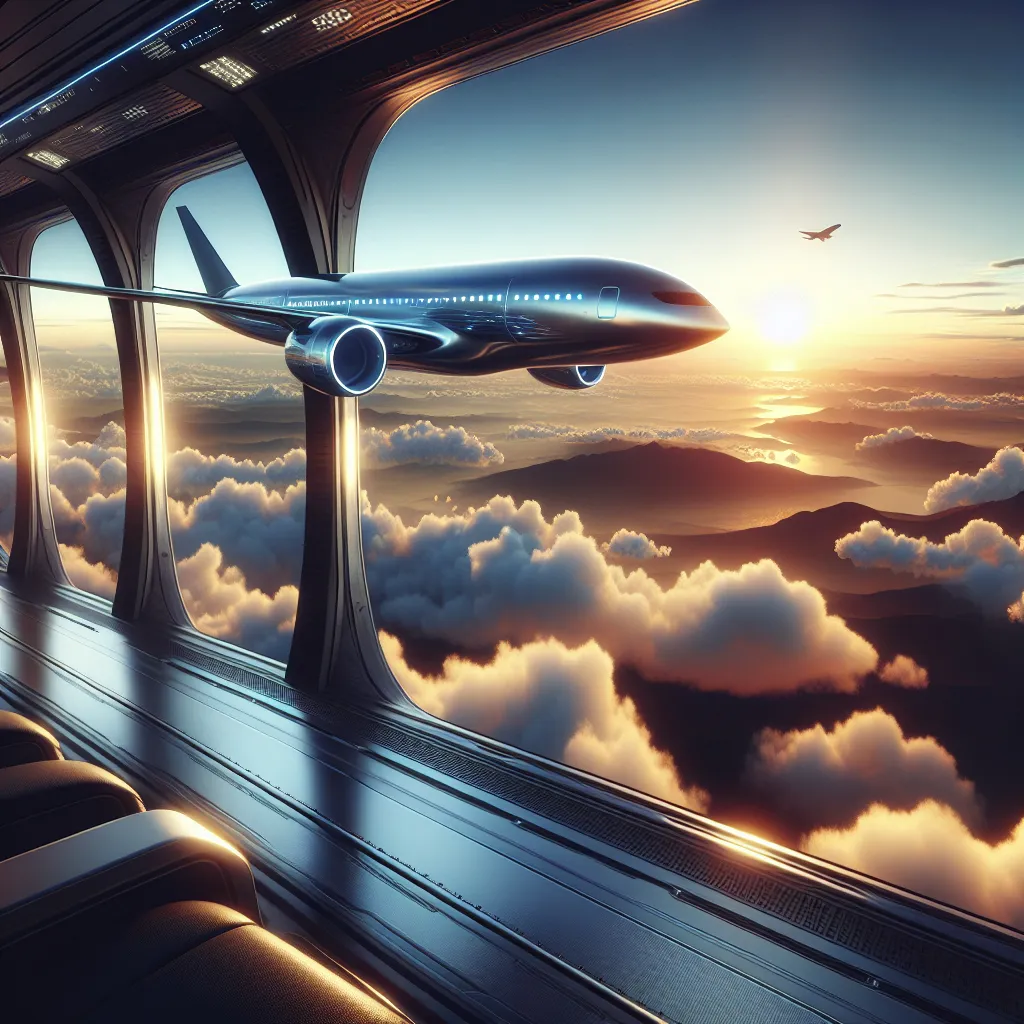
Title: “Soaring Through Skies: The Revolutionary Era of Air Travel”
Introduction
Welcome to the golden age of aviation, where dreams take flight and reality is left far behind! Today’s air travel industry is an exciting fusion of innovation, technology, and unprecedented comfort. This article will take you on a journey through the skies, exploring the remarkable advancements in air travel that have made it possible to soar at 30,000 feet without a care in the world.
The Evolution of Air Travel
Air travel has undergone a dramatic transformation since the Wright brothers’ first flight over a century ago. Early airplanes were slow, uncomfortable, and unreliable, but they paved the way for the modern marvels we see today. Now, aircraft are safer, faster, and more efficient than ever before. They’re equipped with cutting-edge technology that ensures a smooth, comfortable ride, even at altitudes of 30,000 feet.
The Comfort Factor
One of the most significant improvements in air travel is the level of comfort passengers now enjoy. Gone are the days of cramped seats and limited amenities. Today’s airlines offer spacious seating, gourmet meals, and a plethora of entertainment options. Some even provide lie-flat beds, personal minibars, and shower facilities, transforming the flying experience into a luxurious retreat.
The Speed of Flight
Modern aircraft can travel at astonishing speeds, significantly reducing travel time. For instance, the Boeing 747 can fly at a cruising speed of approximately 570 miles per hour, making long-haul flights more bearable. Moreover, supersonic jets like the Concorde, though currently out of commercial service, have demonstrated the potential for even faster air travel in the future.
Safety Measures
Air travel is statistically the safest mode of transportation, thanks to rigorous safety standards and advanced technology. Modern airplanes are equipped with sophisticated navigation systems, collision-avoidance technology, and reinforced structures designed to withstand extreme conditions. These advancements have significantly reduced the risk of accidents, making flying a safe and reliable mode of travel.
The Environmental Impact
While air travel has its environmental challenges, the industry is making strides towards more sustainable practices. Airlines are investing in fuel-efficient aircraft, exploring alternative fuels, and implementing carbon offset programs. These initiatives are helping to reduce the environmental footprint of air travel, making it a more sustainable choice for the future.
Conclusion
The revolutionary era of air travel has truly transformed the way we explore the world. With remarkable advancements in comfort, speed, safety, and sustainability, flying is no longer just a means to an end – it’s an experience in itself. The next time you find yourself soaring through the skies at 30,000 feet, take a moment to appreciate the marvel of modern aviation – where dreams take flight, and reality is left far behind!